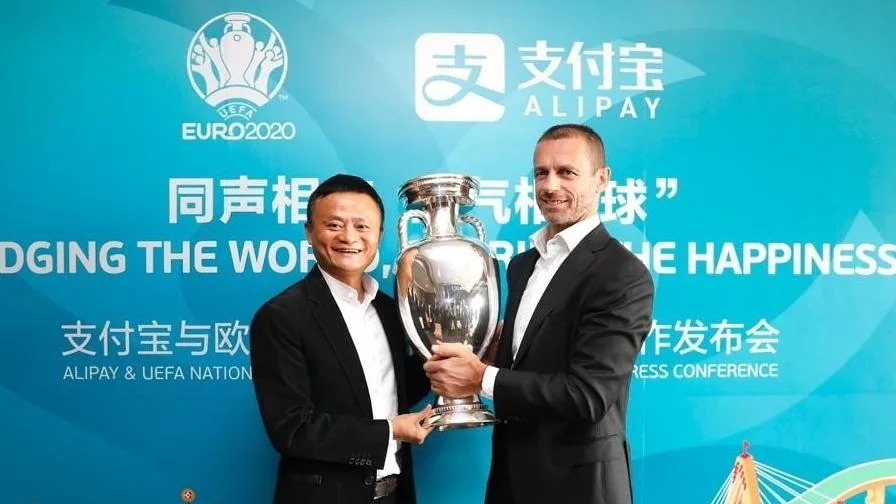
UEFA and Alibaba Group announced on May 29, 2026 — the eve of the UEFA Champions League final in Budapest — a multi-year technology partnership that establishes Alibaba as the exclusive AI, cloud computing, and e-commerce partner of UEFAs mens club competitions from the 2027/28 season through 2032/33. The deal also covers UEFA EURO 2028, extending Alibabas exclusive technology position across UEFAs two most commercially significant properties over a six-year horizon. Financial terms were not disclosed. The partnership is structured through UC3, the joint venture between UEFA and European Football Clubs that controls the commercial rights for UEFA club competitions.
The scope of the agreement positions Alibabas technology across three distinct domains within UEFAs operational infrastructure. In fan engagement, Alibabas Qwen large language model will be deployed to power interactive experiences for the 500 million-plus television viewers and in-stadium audiences that the Champions League reaches annually. In media and content management, Alibaba Cloud will serve as the computing backbone for UEFAs broadcast production and digital asset distribution workflows. The e-commerce component creates a channel for UEFA-licensed products and experiences to reach Alibabas global marketplace platforms, providing a direct commercial integration that moves beyond traditional logo-placement sponsorship into transactional revenue sharing.
The deal represents a strategic pivot by Alibaba in its global sports sponsorship portfolio. Since 2017, the companys most prominent sports commitment has been its TOP partnership with the International Olympic Committee, which runs through 2028 and covers cloud and AI services for the Olympic Games. That relationship gave Alibaba deep experience in large-scale sports technology deployment but constrained annual activation to the Olympic cycle. European club football, by contrast, offers 10 months of continuous weekly programming through three UEFA competitions — a far denser commercial activation calendar. For UEFA, the six-year exclusivity creates a technology partnership moat that smaller leagues and federations cannot replicate, widening the commercial infrastructure gap between UEFAs club ecosystem and national football associations.
The timing of the announcement — confirmed the day before the Budapest final — signals a deliberate strategy by UEFA to leverage peak global attention around its flagship match for maximum commercial impact. For the broader sponsorship market, the exclusivity structure carries significant competitive implications. By granting Alibaba exclusive AI and cloud rights through 2033, UEFA has effectively closed the door on rival technology platforms — Microsoft Azure, Google Cloud, and Amazon Web Services — from participating in UEFAs commercial ecosystem for six years. This raises the competitive threshold for exclusivity arrangements with top-tier sports properties and signals that in the next cycle of rights negotiations, technology exclusivity premiums will be priced accordingly.