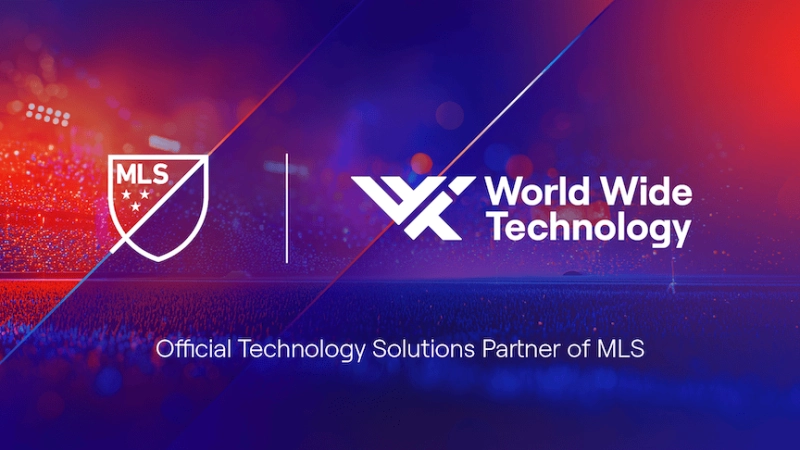
Major League Soccer has named World Wide Technology its official technology solutions partner, a deal that gives the league access to WWTs Advanced Technology Center and AI Proving Ground to build, test and scale artificial intelligence tools across fan engagement, content personalization, matchday operations and internal workflows.
The partnership arrives at a pivotal moment for MLSs commercial trajectory. The league has ridden a sustained surge in attention since Lionel Messis arrival at Inter Miami, and that momentum is compounding with the halo effect of a World Cup hosted across the United States, Mexico and Canada, which has pushed soccer further into the US sports mainstream. The deal also follows several cohorts of MLSs Innovation Lab, which has already surfaced startups working on AI-driven ticketing and other fan-facing technology, suggesting the league has been building toward a platform-level technology commitment rather than treating AI as a series of isolated pilots.
What distinguishes this deal from a typical single-vendor AI partnership is its framing. Rather than deploying one point solution, such as a chatbot or a highlights generator, MLS and WWT describe the goal as connecting multiple technologies and data sources into a unified system capable of understanding fan behavior across clubs, players, matchups and moments. The stated objective is not innovation for its own sake: MLS and WWT have explicitly tied the partnership to measurable business outcomes, including fan retention, ticket demand, merchandise sales and sponsorship value. That is a meaningful shift in how leagues talk about sports technology investment, treating AI infrastructure as a revenue driver to be measured against commercial KPIs rather than a marketing-led innovation showcase.
The strategic logic reflects where the sports AI market has matured to. Early league-level AI deployments tended to focus on single use cases, broadcast enhancement, individual fan apps, or basic personalization, with results that were difficult to tie directly to revenue. By contrast, framing WWTs role around connective infrastructure suggests MLS is trying to build a data layer that can serve multiple business functions simultaneously: a highlight recommendation feeds into content engagement, which feeds into ticket-purchase propensity models, which feeds into targeted sponsorship inventory. That kind of integrated approach requires exactly the enterprise-scale systems integration experience WWT brings from its work across other major industries, rather than the media-technology specialists leagues have traditionally worked with.
For the wider industry, the deal signals that enterprise IT integrators are becoming credible players in sports technology deals, alongside the cloud and analytics providers, such as Microsoft and AWS, that have dominated recent league-level technology partnerships. It also sets a competitive marker for other North American leagues managing crowded fall sports calendars and fighting for discretionary fan attention. If MLS can demonstrate that AI-driven personalization measurably moves ticket demand or sponsorship value, expect the NWSL, and eventually smaller US leagues, to pursue comparable platform-level partnerships rather than one-off AI vendor deals, using MLSs World Cup-driven attention bump as the proof point that technology investment can convert short-term interest into durable fan relationships.