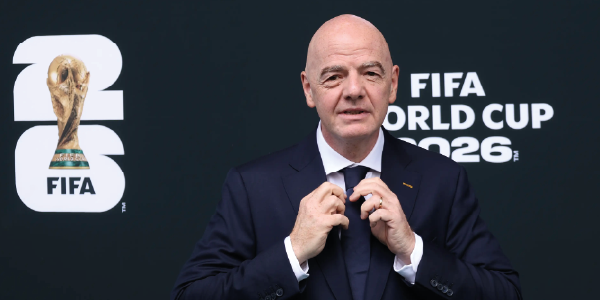
Gianni Infantino apologised to the FIFA Council in Zurich on October 15 for blindsiding its members with a plan to bring private investors into FIFAs commercial operations, but he left the meeting without satisfying European critics who are now openly working to unseat him before the presidential election on March 18, 2027, in Rabat.
The plan, launched and abandoned in July, would have sold a stake in FIFAs commercial business at a valuation of around $20 billion and became public only after the World Cup final. At the three-and-a-half-hour meeting, Infantino offered no documents or new information and asked critics to submit written questions. Debbie Hewitt, chair of the English FA, said: If he doesnt answer those questions, no, he is not fit to be the FIFA president. Bernd Neuendorf, president of the German federation, said no satisfactory answers had been provided. Infantino retains strong support elsewhere, with Mauritanias Ahmed Yahya describing him as the right person to continue leading football. UEFA has asked courts in the United States for evidence that could support a criminal complaint in Switzerland, which FIFAs lawyers have called a smear campaign. Two days earlier, FIFA proposed a $6.35 billion development fund for 2027 to 2030, with $25 million for each member association, up from the $10 million originally planned, funded from more than $3.5 billion in reserves generated by the 48-team World Cup.
The two developments are connected. Each of FIFAs 211 member associations has one vote, and an equal per-association payment matters most to smaller federations, where FIFA money can represent a large share of the budget. Raising that payment while the election contest takes shape turns the World Cup surplus into an electoral asset, whatever its development merits. The dispute over the investor plan also raises a strategic question for FIFA: whether its commercial rights should be partly sold to outside capital or continue to depend almost entirely on the cash generated by the mens World Cup every four years.
For FIFAs commercial partners, the calendar matters. The deadline to nominate a candidate is November 18, an online congress on November 23 will confirm hosts for the 2031 and 2035 Womens World Cups, and the next Council meeting takes place in Doha on December 16. Sponsors and broadcasters are committing money to the 2027 Womens World Cup and the 2030 mens tournament, including Netflixs exclusive rights in Spain announced this month, while leadership of the rights holder is contested. A prolonged fight between UEFA and FIFA would also affect wider issues such as the international calendar and club competitions, making governance risk a factor that commercial partners now need to price into their football exposure.