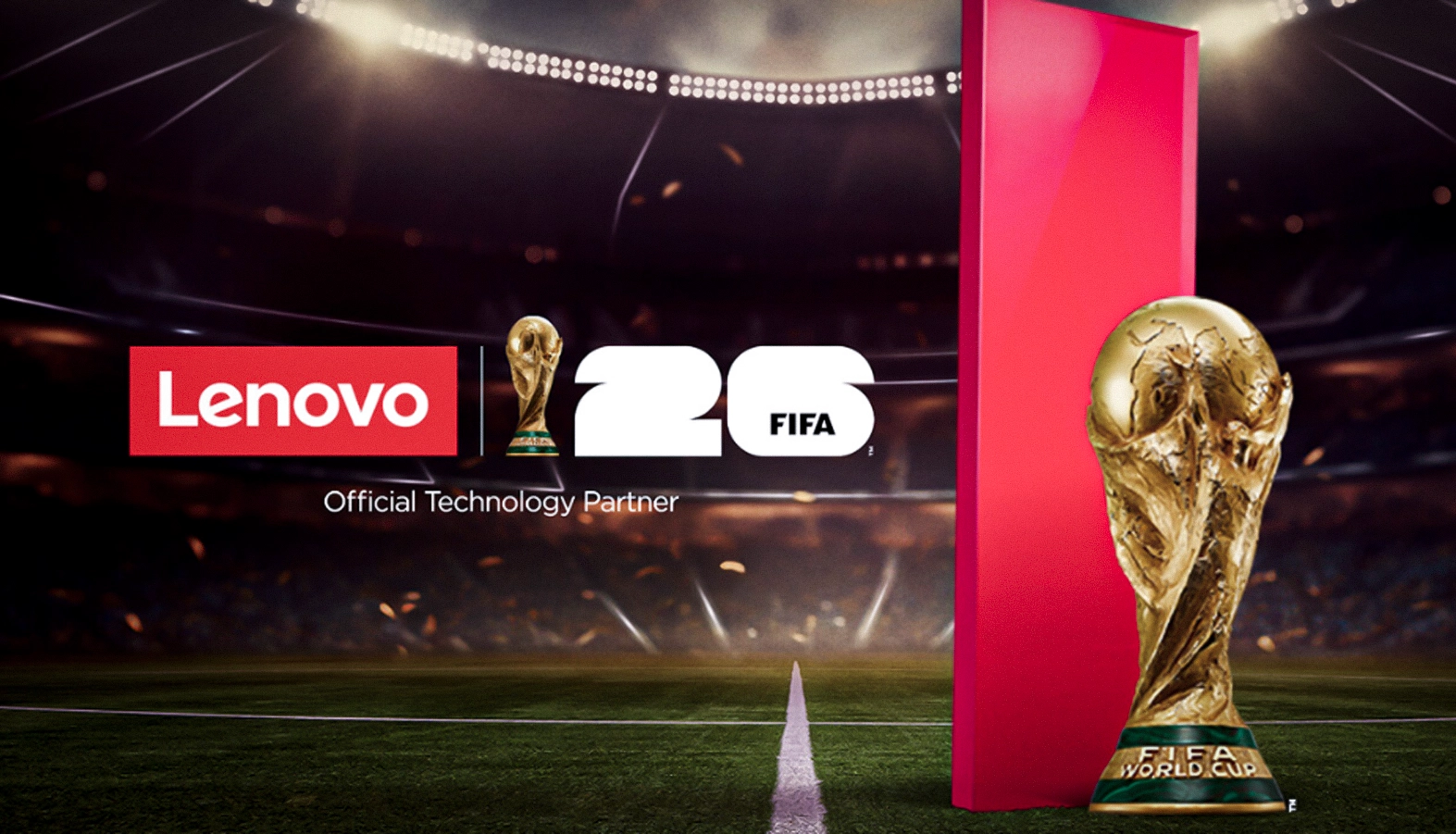
Lenovo, the Official Technology Partner of FIFA World Cup 2026, has revealed the full suite of artificial intelligence innovations it will deploy at the tournament across North America, including a generative AI knowledge assistant for participating teams, 3D digital avatars of players for broadcast and officiating, and an expanded referee body-camera system with AI-driven stabilisation. The announcements, made ahead of the tournaments June kick-off, were unveiled jointly with FIFA at Lenovos Tech World event and confirm the broadest AI rollout ever delivered at a single sporting event.
The centrepiece of the programme is Football AI Pro, a generative AI assistant built on FIFAs proprietary Football Language Model and powered by Lenovos end-to-end AI stack, from client devices through to hybrid cloud and high-performance computing infrastructure. The tool will serve all 48 participating teams with tactical, medical and logistical queries drawn from hundreds of millions of FIFA-owned data points. Alongside it, FIFA will introduce 3D digital avatars of players into both officiating workflows and live broadcasts, and will expand the referee body-camera system trialled at the 2025 Club World Cup, giving broadcasters a new on-field perspective for an audience FIFA projects will exceed six billion. Lenovos arrangement with FIFA also covers the 2027 Womens World Cup.
The strategic significance is the maturation of sports as the leading demonstration surface for enterprise AI. For Lenovo, the tournament functions as a month-long, globally televised product launch for its AI hardware and software stack, addressed to the chief information officers and chief digital officers who make multi-hundred-million-dollar enterprise purchasing decisions. For FIFA, the programme is a dual-purpose play: it monetises the tournament technology category at the top sponsorship tier and simultaneously builds the operational infrastructure FIFA will need to commercialise its football data assets into licensable products for clubs, federations, broadcasters and betting operators. The pattern mirrors Salesforce with Formula 1, IBM with Wimbledon and Infosys with the ATP, and confirms that AI-driven sports sponsorship is no longer a signage exercise but a joint product roadmap.
For the broader industry, three consequences follow. Technology sponsorship of mega-events will increasingly be evaluated by the commercial capabilities the partner can ship, not merely the cash commitment, forcing rights holders to negotiate deliverables, uptime and data-ownership clauses alongside fees. Tier-two federations and leagues without a hyperscaler partner will face rising pressure to align with a single flagship vendor or risk falling behind on fan-engagement benchmarks. And the scale of FIFAs data programme raises new governance questions around player likeness rights, avatar monetisation and refereeing transparency that regulators, unions and broadcasters will need to negotiate before the next cycle. The 2026 tournament is becoming the reference deployment against which all future global sports AI partnerships will be benchmarked.