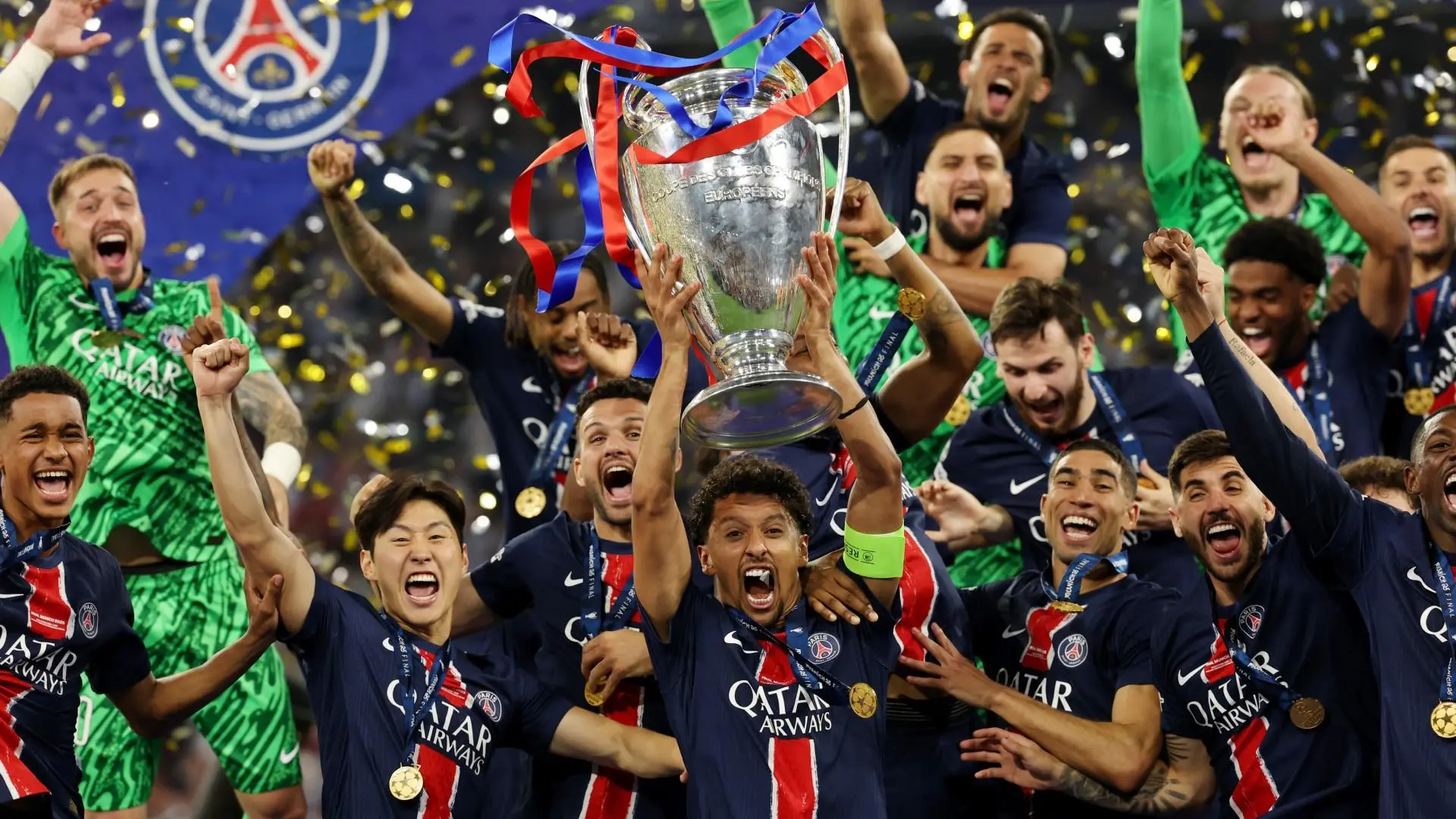
Paris Saint-Germain defeated Arsenal on penalties at Budapests Puskás Aréna on May 30, 2026, retaining the UEFA Champions League title and closing out a competition season that UEFA projects will generate over €3 billion in combined television rights fees, commercial revenues, and prize money distributions. The result delivered PSG a winners prize of €25 million, with Arsenal receiving €18.5 million as runner-up — figures that represent only a fraction of the total earnings each club accumulated across the season under UEFAs expanded financial distribution model.
Both finalists earned between €150 million and €160 million in total 2025/26 Champions League revenues once participation fees, performance bonuses, knockout-stage payouts, and UEFAs value pillar distributions are aggregated. The value pillar mechanism, which allocates funds based on each clubs historical UEFA coefficient ranking and the television market value of their domestic league, delivered an estimated €37 million to Arsenal alone — a structural advantage for clubs in high-value broadcast markets. The final was broadcast by 83 rights-holding partners across television and radio, with UEFA deploying over 1,450 on-site broadcast staff, a 42-camera host production, and an aerial and drone package to serve global distribution. Commercial activations at the event included the Pepsi-presented kickoff show headlined by The Killers alongside David Beckham. Sportico estimated the combined franchise valuation of PSG and Arsenal at over $10 billion heading into the final.
The Budapest final illustrates the degree to which UEFA has repositioned the Champions League from a sporting competition into a vertically integrated commercial franchise. The 36-club expanded format, introduced for the 2024/25 season, was designed explicitly to increase the volume of televised matches and, by extension, media rights revenue — projections that have been validated by the €3 billion season-total figure. The value pillar distribution model ensures that historically significant clubs receive structural revenue advantages independent of current season performance, creating a revenue floor for the competitions most commercially valuable participants. The effect is a system where reaching the final generates over €150 million per club — making qualification for the knockout rounds a financial imperative that shapes transfer strategy, squad building, and ownership expectations well beyond the trophy itself.
PSGs back-to-back victory consolidates the clubs commercial position as a pan-European brand with reach beyond any single domestic market, strengthening the return case for Qatar Sports Investments in a period when elite club valuations are under close scrutiny. For Arsenal, collecting over €150 million in tournament revenue despite finishing as runner-up confirms the commercial logic of sustained deep-round presence regardless of outcome. UEFAs distribution model has been deliberately constructed to produce this result — ensuring that the largest clubs have the strongest financial incentive to remain inside the competition structure rather than pursue breakaway alternatives.