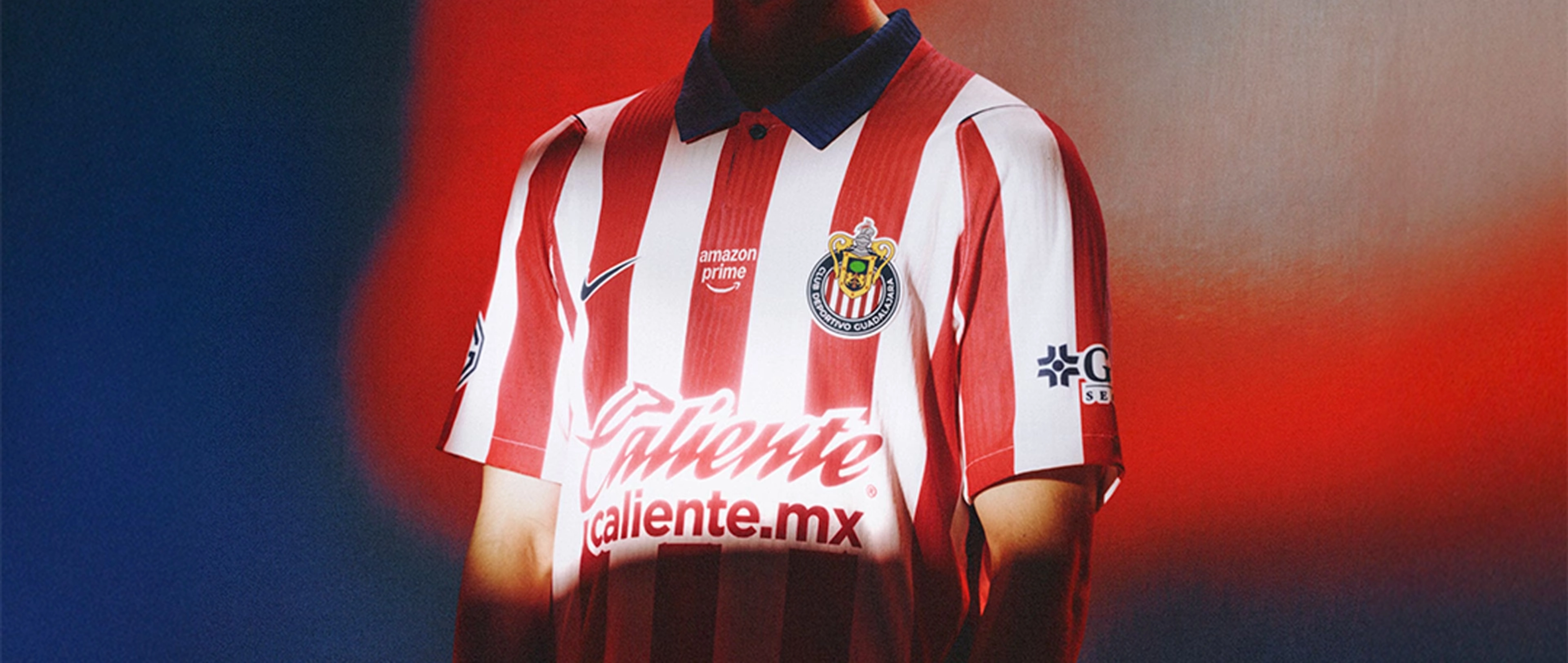
Nike has become the exclusive kit and apparel supplier for C.D. Guadalajara, one of Liga MXs most commercially significant clubs, ending Pumas decade-long partnership with the team. The new Nike kits debuted on the pitch July 18 in Chivass Liga MX season opener, with the global retail collection following on July 22 through Nikes channels and select partners.
The multi-year agreement covers the mens and womens first teams, the youth academy, the clubs esports roster and technical staff, outfitting them with match kits, training apparel and travel gear. Chivas holds a distinctive position in Mexican football: it fields an all-Mexican-player roster by club policy, an identity-driven approach that has made it one of the most widely followed clubs in Latin America, with a fan base that extends deep into the United States through the Mexican diaspora. That combination of scale and cultural specificity is precisely what makes the club valuable to a global apparel brand looking to deepen its footprint in a market it does not already dominate.
The timing is not incidental. The deal was announced days before the conclusion of a World Cup hosted jointly by the United States, Mexico and Canada, an event that has elevated cross-border interest in Mexican football and Liga MX specifically. Nike and Adidas have spent recent years competing intensely for the top clubs and federations across Latin America, a region where Adidas has historically held stronger relationships in several markets. Landing Chivas gives Nike a marquee property in Mexicos domestic league at the exact moment US audience attention to Mexican soccer is elevated, and positions the brand to capture Hispanic-market demand in the United States that overlaps heavily with Chivass fan base.
For Puma, losing Chivas after ten years is a setback to its Americas football portfolio, removing one of its most recognizable Latin American club partnerships at a moment when apparel competition for the regions top properties is intensifying rather than easing. The move also reflects a broader capital allocation pattern among the major kit suppliers: with Europes top five leagues largely locked into long-term, high-value contracts with limited near-term turnover, incremental growth increasingly comes from properties outside that core, including Liga MX, MLS and other American football markets riding the tailwind of World Cup hosting.
Financial terms were not disclosed, which is typical for Liga MX kit deals, but the strategic value extends beyond the contracts direct size. A Nike-Chivas partnership functions as a distribution and marketing platform: replica kit sales, retail placement and athlete-adjacent content tied to one of Mexicos most popular clubs, at a moment when Nike is publicly emphasizing investment in womens football and football culture outside its traditional European core markets.
The broader industry implication is that Liga MXs commercial value has been repriced upward by hosting the World Cup, and apparel brands are moving quickly to lock in relationships before that value is fully reflected in negotiating leverage. Other Mexican clubs whose kit contracts come up for renewal in the next two to three years should expect more aggressive competition between Nike and Adidas than in prior cycles, with Chivas now serving as the markets new benchmark deal.