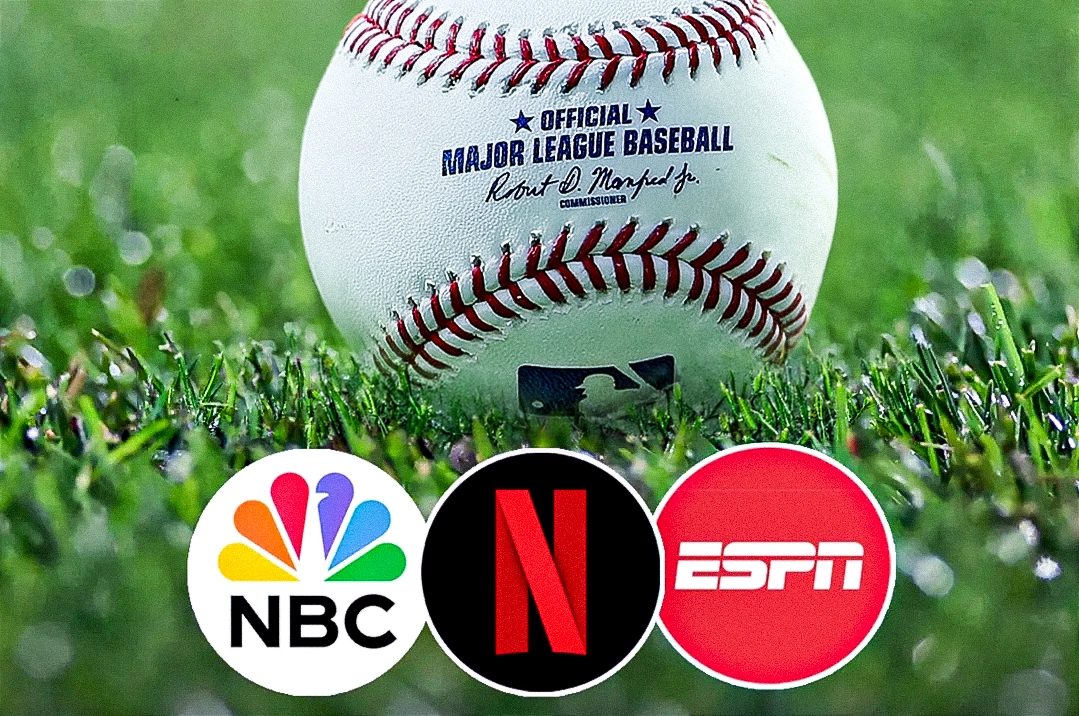
Major League Baseball restructured its media rights across 2026–2028 with ESPN, NBC, and Netflix—a $800 million annual commitment that fundamentally redistributes premium programming across platforms rather than concentrating it with a single network.
The deal marks a decisive break from the network-centric model historically dominating sports broadcasting. Sunday Night Baseball moves to NBC beginning 2026, providing the network with baseballs most valuable primetime slot. Peacock streams the Sunday Leadoff game with 18 contests scheduled around noon ET. ESPN simultaneously loses Sunday night slots, postseason games, and the Home Run Derby—representing substantial market share compression for the network.
Each platform gains differentiated content rather than competing for uniform packages. This distribution strategy reflects underlying market fragmentation. Audiences no longer cluster around single broadcast windows. Some viewers consume content through cable television. Others depend entirely on streaming subscriptions. Many maintain multiple service subscriptions simultaneously, creating segmented viewing patterns that single-broadcaster models cannot efficiently serve.
Netflixs participation reshapes the calculus entirely. The platform boasts 300 million subscribers globally but historically lacked major sports properties. Baseball offers Netflix immediate legitimacy in sports while giving the league access to Netflixs international distribution network and subscriber intelligence. This cross-marketing benefits both parties—Netflix gains premium content, baseball reaches cord-cutting households otherwise unreachable through traditional distribution.
For teams and franchises, the arrangement creates revenue stability despite viewership uncertainty. Three-year terms provide flexibility to adjust if consumption patterns shift faster than anticipated. For networks, the partnership model distributes risk—no single broadcaster depends entirely on baseballs audience performance. If viewership declines, the impact distributes across three entities rather than concentrating within one.
The precedent will shape future negotiations across professional sports. Leagues now understand that exclusive single-network deals may underperform compared to portfolio distribution strategies maximizing reach across demographic segments. This approach likely becomes standard as sports properties seek to simultaneously capture traditional broadcast audiences, cable viewers, and cord-cutting households increasingly accessing content through streaming services.