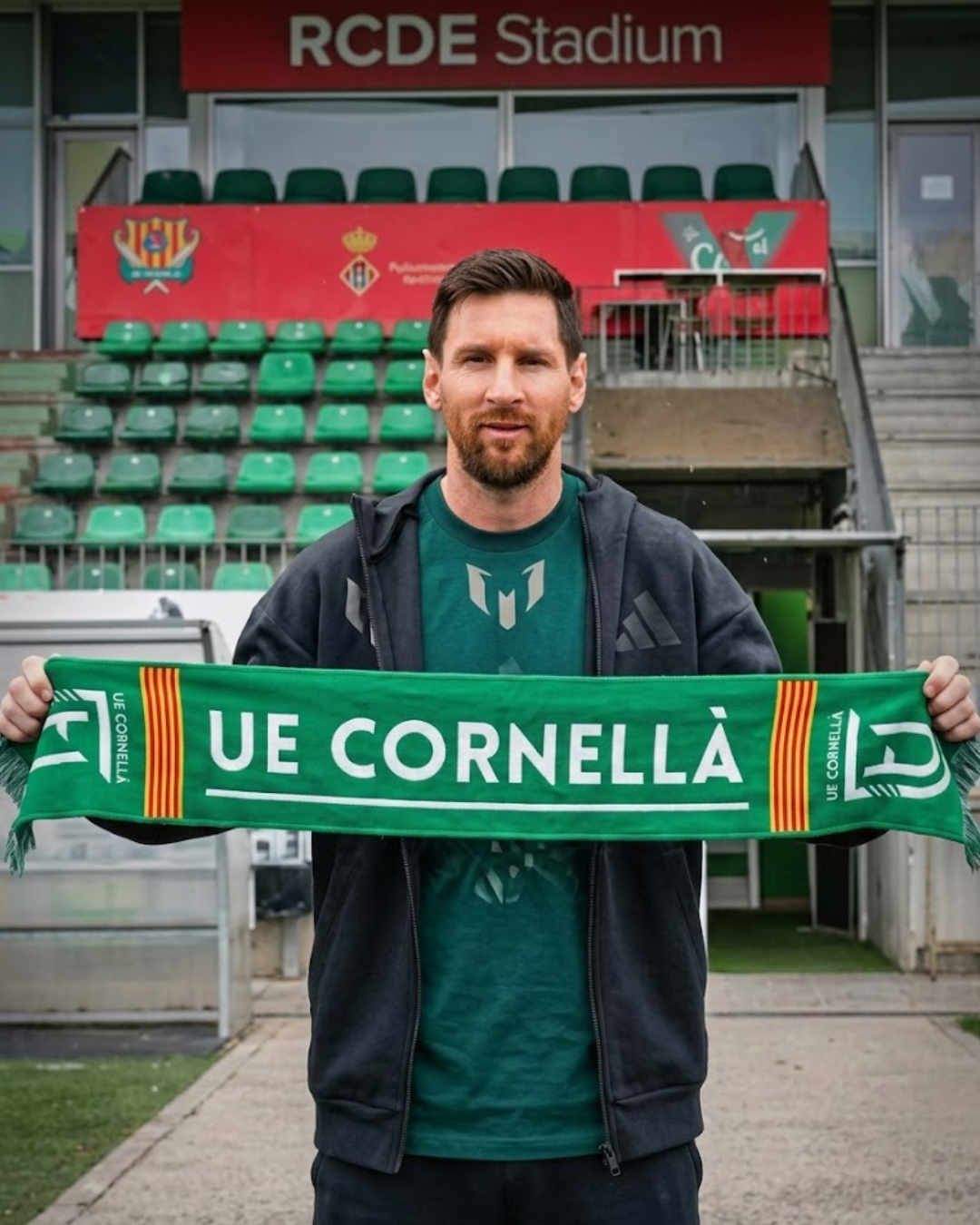
Lionel Messi is set to enter womens football in Europe for the first time through the creation of a new womens team operating under the structure of UE Cornellà, the fifth-division Catalan club in which he holds a stake. According to the club, the project will begin competing in the Segona Catalana — the eighth tier of the Spanish football pyramid — in the 2026-27 season, fully managed through the business and sporting infrastructure connected to Messis environment. It represents his first concrete institutional move in womens football on the European continent.
UE Cornellà already operates a womens team affiliated with its foundation, but the new project will function as an independent entity with distinct sporting and commercial ambitions. The decision to structure it separately signals an intent to build a standalone property rather than an administrative extension of existing community programmes. Cornellàs mens team has operated in the lower tiers of Spanish football while gradually strengthening its commercial and operational infrastructure since Messis involvement became public, and the womens project appears to follow the same long-term construction logic: start at the base, build with patience, and leverage the Messi brand to accelerate visibility and investment.
The strategic significance of the move extends well beyond Messis individual profile. It reflects a structural shift that has been accelerating across elite sport: the worlds most commercially valuable male athletes are increasingly directing capital and institutional attention toward womens sports properties, recognising both the social return and the financial arbitrage available in a market that remains undervalued relative to its audience size and growth trajectory. Serena Williams has been active in ownership structures across multiple sports. RedBird Capital Partners has built a portfolio that includes womens properties alongside its mens assets. The pattern is consistent: sophisticated investors are entering womens sport early, at low valuations, ahead of what they anticipate will be a sustained rerating of the asset class.
For the womens football ecosystem in Spain and beyond, the Messi-Cornellà project carries a significance that its entry level does not suggest. A recognised global brand entering at the base of the pyramid — rather than acquiring an established club — introduces a model of organic institutional development that differs from the top-down investment seen in NWSL or WNBA franchise acquisitions. If the project develops commercially and sportingly over the next five to ten years, it will add to the growing body of evidence that womens football clubs built from the ground up, with serious infrastructure and brand backing, can become financially self-sustaining properties in their own right.