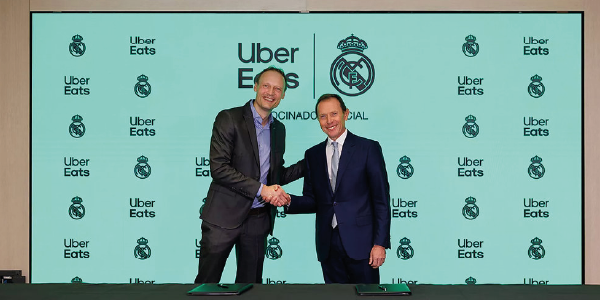
Real Madrid has signed Uber Eats as its official delivery partner in Spain in a three-season agreement running to June 2029, which also makes Uber an official club partner. The deal, announced on October 7, gives the brand a presence at Santiago Bernabéu matches and across the clubs digital channels, with joint campaigns, content and fan experiences. Financial terms were not disclosed.
The contract also leaves room for possible future initiatives in ridesharing and in the fan experience around the Bernabéu. The launch was activation-led: an audiovisual campaign under the slogan Hunger has brought us here, revisiting moments in the clubs history, and a five-day pop-up in Madrids Callao square serving free recipes inspired by famous Real Madrid comebacks, which fans could then order through the app. Emilio Butragueño, the clubs director of institutional relations, said Real Madrid was delighted with this alliance with a leading company in its sector. Marinus van Gestel, general manager of Uber Eats in Spain, said the partnership offered a unique opportunity to connect with the clubs fans. Uber Eats joins a partner roster led by Adidas as kit supplier, Emirates on the front of the shirt and HP on the sleeve, and follows the clubs renewal of Sportfive as an authorised VIP ticketing partner for the Bernabéu in late September.
The structure is the most significant element. This is a domestic category deal, not a global one. By selling delivery rights for Spain only, Real Madrid keeps the same category available in other markets, where regional partners can pay for local relevance. It is the same unbundling logic that saw Visa return to the NFL this month through club-level deals rather than a league-wide category. The delivery category also fits the economics of modern fandom. Most supporters follow matches at home or in bars, and a delivery app can turn that viewing occasion into measurable transactions, giving the sponsor performance data that a traditional branding deal cannot. The ridesharing clause matters too. A stadium in central Madrid that is being run as a year-round venue creates a mobility problem around every event, and Uber is positioned to sell itself as part of the solution.
For clubs, the deal reinforces a move from a few large global partners towards a denser grid of territorial categories that together raise total commercial yield. For brands, it shows how sponsorship can be bought and assessed like performance marketing, measured in orders rather than impressions. In Spain, Uber Eats competes with Glovo and Just Eat, and attaching itself to the countrys most valuable club brand is a direct way to win share in a contested market. Other European clubs with strong home markets are likely to follow the same approach.